About Carnivorous Plants
Carnivorous plants are meat-eating plants that need the nutrients from their natural growing conditions, like air, water, and soil, to live as well as the nutrients from the insects and other bugs and arachnids that they consume. Carnivorous plants grow naturally in swampy areas around the world where the water that is constantly running over and below the ground washes the nutrients away in the soil. In order to get those missing nutrients, the plants have adapted and learned to eat the meat from the small animals that land on them. Some popular carnivorous plants that you can purchase and grow at home are venus fly traps, sundew plants, and pitcher plants.
According to the International Carnivorous Plant Society (www.sarracenia.com), to be classified as a carnivorous plant:
- Prey must find its way to the trap, and is usually encouraged to do so by attractants fabricated by the plant.
- Prey must be captured by the plant.
- The prey must die while in the clutches of the plant.
- The prey must be digested.
- The nutrients from the prey must be assimilated by the plant.
The nutrients from the prey must be assimilated by the plant.
Venus Fly Trap
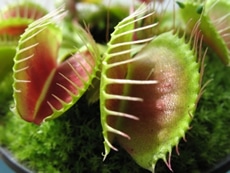
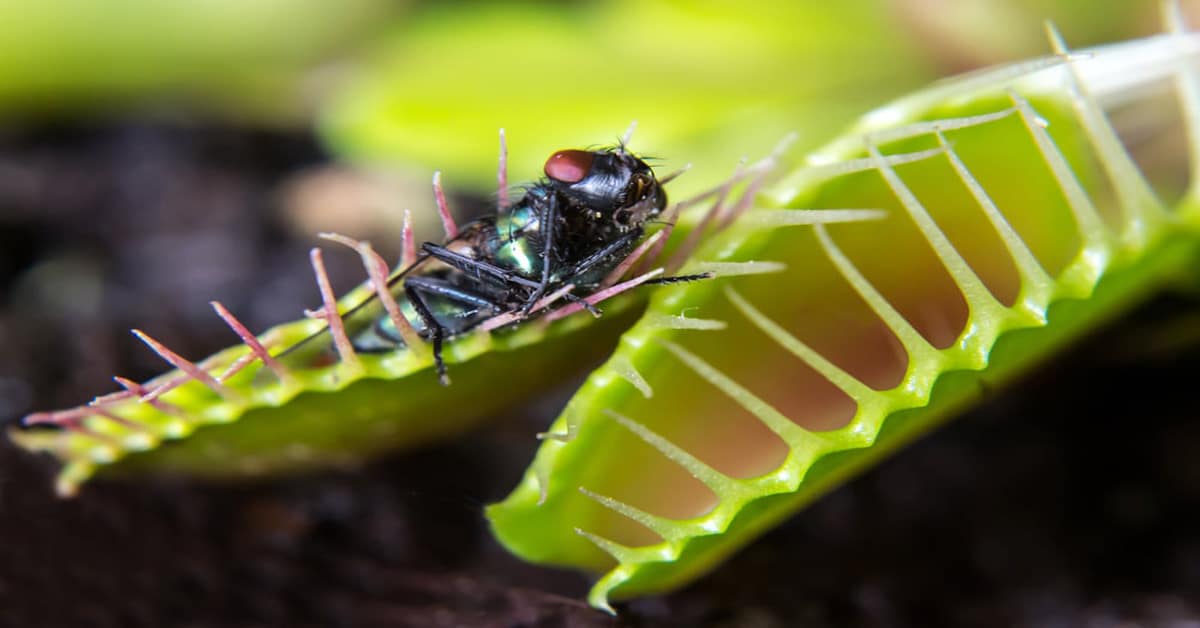
The Dionaea muscipula, more commonly known as the venus fly trap, is a carnivorous plant that looks like a big mouth with teeth that opens all the way up and just waits for an animal, like a spider or an insect, to land on it. The mouth (trap) will then close around the prey and the plant will eat it. The way a Venus fly trap captures its food is by waiting for a life form to land or crawl on the trap – twice. The trap won’t close on the first landing because it isn’t sure that it is an animal. It could have just been a leaf falling. But when it feels the animal again in a very short period of time, it will close in on the bug very quickly and begin the process of eating it. Venus fly traps can be found growing in the swamps of the Carolinas mostly, but have also been found in the Pine Barrons of New Jersey and in Northern Florida.
Sundew
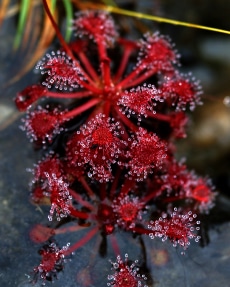
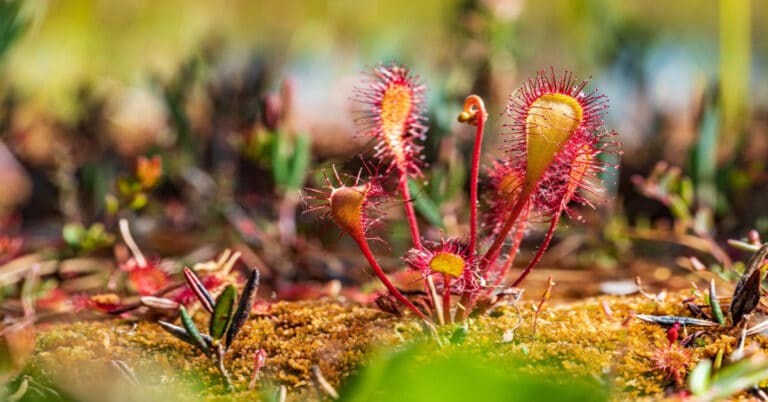
The sundew, scientific name Drosera, looks like a beautiful flower or a very cool-looking stem with dewdrops all over it, but the dewdrops are actually mucilage (like mucous) at the ends of the tentacles that it uses to trap its prey. The sundew preys on insects primarily, and waits for the insects to land on the inviting flowers. The insect gets stuck in the mucilage and then gets digested. There are about 170 different species of sundew plants in places like Africa, Venezuela, and Australia.
Pitcher Plant
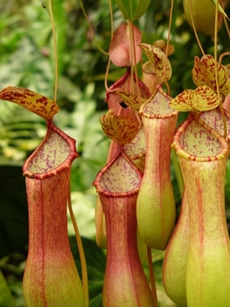
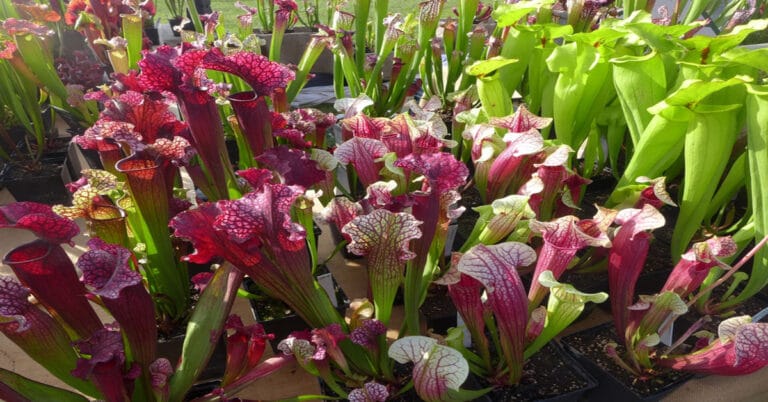
The pitcher plants come in all shapes and sizes and grow around the world in different variations and species. The North American pitcher plant looks like a rolled-up leaf forming a tube. Inside that tube is a gel substance that traps insects that make their way into the tube. Some species of pitcher plants have a fly paper type of trap rather than a tube trap, which is called a pitfall trap. Some pitcher plants look like flowers, some like stems, and some look like leaves.
You can purchase these carnivorous plants online and have them delivered right to your home or office. They make a wonderful conversation piece, and some people even consider them a sort of pet. No matter what you think of your carnivorous plant, you will think it is fun.
North American Pitcher
The North American Pitcher plant will deceive some non-necessary insects at your house. This beautiful plant is well-prepared to capture and digest insects and fill up the missing minerals in this way. With several different tactics for trapping insects, the plant never stays hungry and is always well-fed.
The North American Pitcher is very diverse in color, type, and trapping tactics. There are eight different species with different attractive colors. All of the species are beautiful but don’t trust the beauty. It is created for insects to be easily deceived and captured.
You might wonder how to take care of it at home. First, you need to pick a location that gets five or more hours of direct sun each day and does not let its soil dry out.
California Pitcher
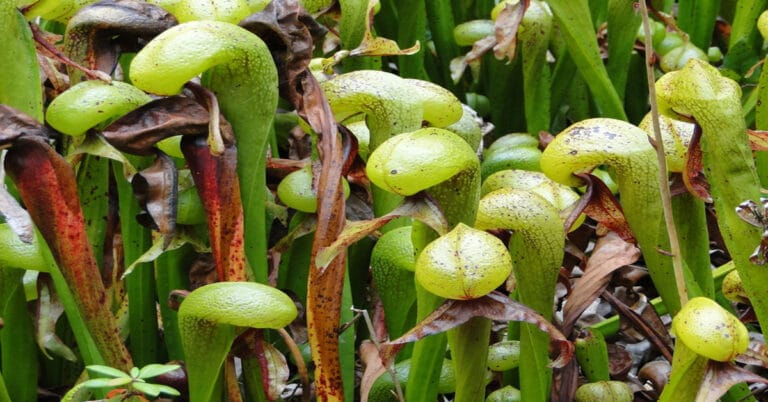
The California pitcher plant is bright green, and what makes it unique is that it has wing-shaped leaves that protrude from the top of the bulbous cap, so when you look at it for the first time, you might think it looks like the head of a snake, which is bowed down. This is the reason why it is sometimes referred to as the cobra pitcher plant.
If you want to find this beautiful plant, you should know that it grows in sunny, wet areas near streams, and you might also find it in bogs throughout Northern California. The interesting thing is that the plant California pitcher isn’t soil-dependent, and that’s why it can grow in soils that contain toxins or heavy metals.
Color and nectar capture insects’ attention, and once this happens, they’re destined to die in the leaves of the California pitcher. The insect becomes disoriented as soon as it enters the bulbous. Then it loses its way back to the exit and eventually gets trapped inside the tube.
Scientists aren’t sure how California pitcher plants pollinate. According to recent research, bees and spiders visit and pollinate the flowers, but self-fertilization might also play a significant role in the reproduction of California pitcher plants.
Western Australian Pitcher
This carnivorous plant is also called the fly-catcher plant since it is a professional insect killer. Most carnivorous plants are photosynthetic, and so is the Western Australian pitcher plant, which relies on carnivory to obtain nutrients. The plant is on the IUCN Red List of Threatened Species, so it needs to be protected. This also explains why the plant is popular among collectors.
During its life, the plant Western Australian Pitcher reaches a height of about 8 inches, and unlike most other pitcher plants, it has additional leaves as pitfall traps for insects and other small prey. These carnivorous leaves form short, green-colored pitchers. The coloration of the lid attracts prey, confuses, and exhausts flying insects within the trap. It also prevents escaping insects from the plant.
Heliamphora
The Heliamphora plant is one of three genera in the family Sarraceniaceae. This beautiful plant has an interesting habit: it grows on the flat-topped mountains that are hidden in clouds, also called the Guiana Highlands, usually at an average height of about 2400 m.
This pitcher plant Heliamphora uses many of the same tactics as other pitcher plants, including the most common one – a “pitfall” trap. In addition, it also has a slippery lip, sweet nectar, and sharp hairs that face downward, leading insects into the trap and leaving no back exit for them. Compared to other carnivorous plants, the leaves of Heliamphora are not very efficient at catching insects.
Nepenthes
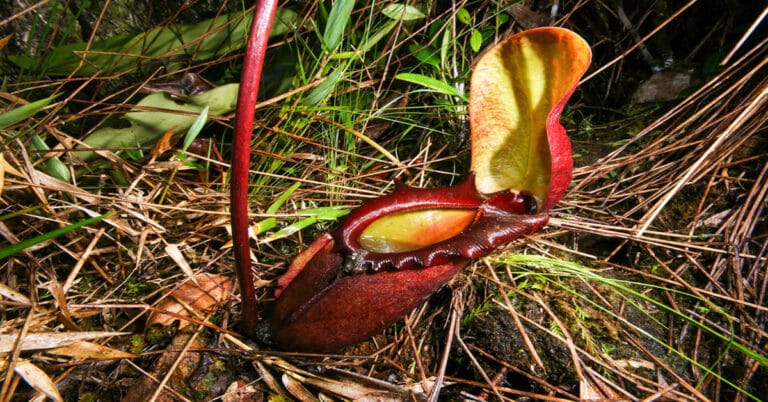
The plant Nepenthes, commonly known as tropical pitcher plants, are herbaceous perennials that thrive in acidic soil. The principle is the same – it is a carnivorous plant that uses its pitcher-shaped leaves as pitfall traps to catch insects and other prey and fill up some minerals it couldn’t get from the soil.
Insects are attracted to the nectar on the underside of the trap’s lid. The prey usually slips from the pitcher into a sticky consistency at the bottom. This is added to the downward-pointing hairs and slick sides, and all of it makes it impossible to escape from the plant. Insects are finally digested by enzymes
If you decide to get this plant for your garden, keep in mind that Nepenthes prefer bright light without much direct sun and that they should not be allowed to dry out.
Drosophyllum
This shrub-like carnivorous plant can grow to 40–50 cm in height. It has 5–15 mm thick stems that tend to creep along the ground as they grow taller, and its leaves typically reach lengths of 10–25 cm. Per apical rosette, there are usually ten or more slender, needle-like leaves. With its interesting shape, it hunts insects and fills up its missing minerals this way.
If you want to find this “beast” Drosophyllum plant, it usually occupies habitats in northern Morroco, Portugal, and southwest Spain. These plants thrive in narrow coastal or marine locations with regular morning fogs during the summer.
If you decide to get this beast, you should know that it likes full sun, even on the hottest and driest of days. Use the tray method to water young plants. It’s more of a dry soil fan than most carnivores.
Butterworts
Butterworts are small herbaceous plants that produce rosettes of generally flat leaves. Their leaves are soft, slightly sticky, and buttery, with a greenish-yellow tint. Carnivorous butterworts prefer alkaline soil and can be found in areas where nutrients are scarce and the temperature is high.
This beautiful plant Butterworts loves to hunt insects with its insect-trapping resin that is coated on the plant’s leaves. Gnats are usually the preferred prey of these tiny plants, as they provide important nitrogen to the plant. Upturned margins are common.
Catopsis
This carnivorous plant is special because it grows high up in the trees, most often you can find it on bare trees in full sun, to avoid falling leaves. On the underside of the leaves of the plant Catopsis, there is a chalky powder. Lots of carnivorous plants contain chalky powder since it confuses insects and makes them slip and fall back into the trap. Interestingly, it also helps them reflect ultraviolet light, which makes the plant more noticeable to insects.
Bright, indirect light is usually best for the plants, and be careful not to overwater them. For watering, we suggest you use distilled or rainwater.
Horned Bladderworts
Horned bladderworts are small to medium-sized and have slender, small leaves that are usually hidden in shallow water. The plant has yellow flowers, and you can mostly see them in summer. When flowers are absent, the plant is difficult to locate and identify.
The species can be found in ponds, bogs, seepages, along shorelines, or on the moist peaty ground. The horned bladderwort can be found in much of North America’s eastern half. It captures its prey using little bladders that are submerged in shallow water or wet soil. Each bladder has a trap door ringed by trigger hairs, which makes it easier for plants to hunt.
If you are going to keep the plant Horned Bladderworts in your garden, take note that the plant needs at least 4 hours of bright sunlight and prefers another 4 hours of indirect or filtered light every day.
Carnivorous Plant Care
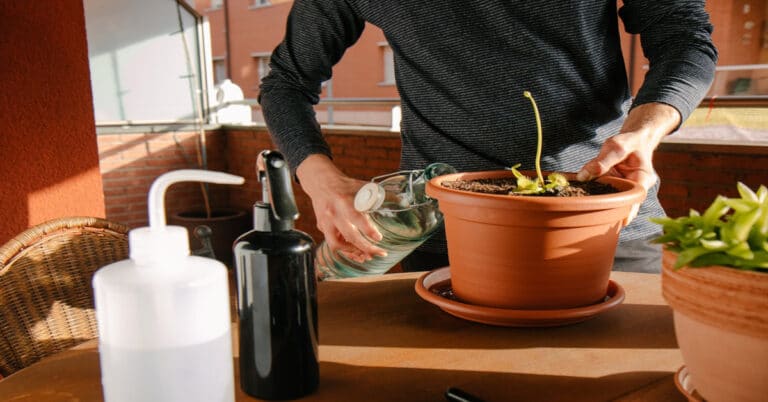
If you are interested in carnivorous plants, then we have some tips for you on carnivous plant care that will give you some ideas on how to look after them properly. The first rule is to know exactly what species you own and treat it accordingly since all species have individual needs.
You should also keep your plants moist at all times because they cannot survive if they aren’t. They can manage their diet on their own, but if you keep the plant indoors, you may collect insects and feed them to the plant. But do not use other meals as a substitute. They may be good for us, but not a complete meal for them.

Having discovered a fondness for insects while pursuing her degree in Biology, Randi Jones was quite bugged to know that people usually dismissed these little creatures as “creepy-crawlies”.